Tarmak007 -- A bold blog on Indian defence: June 2010

For regular updates, visit: https://www.facebook.com/Tarmak007

Clipart Clipart Clipart Clipart Clipart Clipart Clipart Clipart Clipart

Tuesday, June 29, 2010

INS Cankarso & INS Kondul commissioned

INS Cankarso and INS Kondul, fifth and the sixth in a series of Water Jet Propelled Fast Attack Craft (WJFACs) of the Indian Navy were commissioned by His Excellency, Shri ESL Narasimhan, Honourable Governor of Andhra Pradesh, alongwith Vice Admiral Anup Singh, Flag Officer Commanding-in-Chief, Eastern Naval Command today, 29 Jun 10, at an impressive Ceremony held at the Naval Base here.
On arrival at the Naval Jetty the Chief Guest was received by Vice Admiral Anup Singh, Flag Officer Commanding-in-Chief, Eastern Naval Command. The Governor was presented a 50 men Guard and was introduced to the Ships Officers and Sailors. The inaugural address was delivered by Chairman and Managing Director, M/s Garden Reach Shipbuilders and Engineers (GRSE) Limited, Rear Admiral (Retd) KC Sekhar. On completion, Vice Admiral Anup Singh, Flag Officer Commanding-in-Chief, Eastern Naval Command gave the keynote address. Thereafter, Lieutenant Commanders Arun Bahuguna and Shashidhar R Patil, Commanding Officers INS Cankarso and INS Kondul respectively, read out the Commissioning Warrants, followed by hoisting of the Naval Ensign onboard for the first time and Breaking of the Commissioning Pennant with the National Anthem being played to mark the completion of the Commissioning Ceremony. Addressing the gathering later, the Chief Guest said the ships would provide the much needed coastal security cover against seaborne threats and enhance the coastal security of capabilities of the Navy.
Other Distinguished Guests present on the Occasion included Flag Officer Goa Naval Area, Rear Admiral Sudhir Pillai, other Flag Officers, Commanding Officers and Senior Officers from Ships and establishments of the Eastern Naval Command. (Press Release)

Sonia Gandhi lays foundation stone for 8.8 km-long Rohtang Tunnel

 By Sitanshu Kar & T.K. Singha
The foundation stone for the strategic 8.8 km long Rohtang Tunnel, to be built at an altitude of over 3,000 mts in the Pir Panjal range, enabling an all-weather road link across the snow-capped Rohtang Pass (3,978 mts), was laid by the Chairperson of National Advisory Council, Smt Sonia Gandhi, in Manali today. The tunnel will provide unhindered road access to the remote regions of Lahaul-Spiti and Pangi Valley throughout the year, besides reducing the road distance by nearly 48 Kms, a travel time of about four hours.
A brief multi-faith ceremony was held at the South Portal, 15 Kms from Manali, where the drilling work on the tunnel commenced today.  Smt Gandhi was accompanied by Union Defence Minister, Shri AK Antony, Union Steel Minister, Shri Vir Bhadra Singh, Himachal Pradesh Chief Minister, Shri Prem Kumar Dhumal, MoS for Defence, Dr MM Pallam Raju, Defence Secretary, Pradeep Kumar, DG Border Roads Organisation (BRO), Lt Gen MC Badhani and other officials from the State and Ministry of Defence.
Addressing a public rally near Manali, Smt Gandhi reminisced that the project was the dream of former Prime Minister Rajiv Gandhi and expressed satisfaction that it was finally on its way to being realised. The tunnel at an outlay of 1,495 Cr is expected to be completed by BRO in Feb 2015. The horse-shoe shaped tunnel will be a two-way lane in a single tube, 11.25 mts wide. The tunnel will give a boost to tourism in the region, facilitate better access for medical treatment and provide more avenues of employment to the youth, she said.
Simultaneously, drilling work also commenced at the northern portal (exit point), joining the Manali-Sarchu road, over Chandra river. One of the unique features of the tunnel being constructed at the rarefied altitudes includes incorporation of semi-transverse ventilation system, where large fans would separately circulate air, in and out throughout the tunnel length and thus reduce vehicular fumes.
In his brief introductory remarks , DG BRO, Lt Gen Badhani spoke about the challenges that the workforce will endure. Terming it as an extremely prestigious project, coming in its Golden Jubilee year, he assured that BRO will leave no stone unturned for timely completion of the project. The tunnel will not only serve the purpose of the people in the region but will also prove vital for troops of the Armed Forces serving in the Leh-Ladakh region, all-year round.
The tunnel is being constructed under the aegis of BRO by M/S STRABAG-AFCONS, a joint venture between India’s Afcons Infrastructure Ltd and Strabag SE of Austria, world’s fourth largest construction company. The work is expected to take 63 months for completion.
The Rohtang tunnel alone may not be enough to make the Manali-Keylong-Leh highway an all-weather road due to two other major snow-bound passes on way – Baralacha La and Thaglang La. To overcome this, the project also envisages construction of 292 Kms long all-weather road, Nimu-Padam-Darcha via Shinkunla Pass, traversing the remote Zanskar region of J&K, at an additional estimated cost of Rs 286 Cr.
Project Rohtang is the 18th project of the BRO countrywide. BRO is a premiere infrastructure creation and consolidation organisation under MoD and has constructed more than 48,300 Kms of road, 400 major bridges measuring a total of 36 Kms including 19 airfields mostly across difficult terrain and inhospitable climates.

Sunday, June 27, 2010

To speak or not: Mute's the mantra for armed forces!

27.06.2010, DNA, Bangalore (Page 5)

Shore-based test facility (SBTF) getting ready for Tejas Navy in Goa

The SBTF in Goa will sort of look like the photo above. Photo only for representation and not that of the facility.
By Anantha Krishnan M. | Bangalore, India |
June 26, 2010 | DNA (India) | Page 1
The Naval Air Station in Goa is silently readying a first-of-its-kind facility in India. The shore-based test facility (SBTF), when fully-operational, will be third such test facility in the world after the US and Ukranian Navies.
Naval sources tell DNA that the SBTF simulates an aircraft carrier with ski-jump and arrested recovery. “It’s recreating a ship on the shore. The one that’s coming up in Goa is based on the Indigenous Aircraft Carrier (IAC) that’s being built at Cochin Shipyard. The SBTF is constructed with the same measurements of IAC,” sources tell.

DNA learns that all initial flight tests leading up to the carrier-suitability test (CST) will be done at HAL airport in Bangalore. “After the initial flight tests, we will shift all actions to SBTF. The ramp for the take-off area will be ready by the last quarter of 2011 and the landing area in 2012. A full-fledged telemetry unit is also coming up in Goa,” the senior-ranked serving official said.
For full version, click the link below:
www.dnaindia.com

Saturday, June 26, 2010

India Thought Leaders: ADA boss PS says Tejas' ownership among users have gone up; we have taken the blow, but we have delivered too

India’s Light Combat Aircraft (LCA-Tejas) program boss P.S. Subramanyam (above) and his pet metal bird Tejas performing a stunning manoeuvre (below). Photos: t-arch-20010

 
By Anantha Krishnan M. | Bangalore, India | 
June 25, 2010 | DNA (India)

Tejas, India’s light combat aircraft (LCA), is finally giving goose bumps to thousands of engineers, designers, scientists and technocrats. The limited series production (LSP) platforms are hitting the sky like nobody’s business. There’s excitement in the air. There’s hope. And there’s a goal that’s just within their reach. Amidst all the news of the initial operational clearance (IOC) within sight and the near-services version configuration (LSP-4) flying recently, one man is calm and composed, for he knows the end of one journey is just the beginning of another. In a one-on-one with Aviation Week, as part of the India Thought Leaders (ITL) interview series, Program Director (Combat Aircraft) and Aeronautical Development Agency (ADA) Director P.S. Subramanyam (known among close peers as P.S.), says the technological knowledge gained through the Tejas program is sure to make India a force to be reckoned with in all future military plane-making missions.
A.W.: No other program has received so much media bashing in addition to genuine concerns from your users. What was the motivational thread you adopted during these difficult times?
P.S.: I don’t want to comment on the media, though at times we did think of putting [in] a firefighting plan to counter one-sided remarks in the press. Later, we decided against it, knowing that it would divert our focus from the main goal. Yes, we had difficulties as we were attempting to do something that has never been done in this country. Yes, we slipped because we had to face many challenges from different quarters while mastering technologies. But don’t forget the fact that my team took the blow but finally delivered. Now, to the users. We understand their concerns and even they, too, are aware of our constraints. The project has definitely received a huge push after a project management team from IAF started functioning from ADA. They are the pacemakers for the program now and involved in every bit. This has also increased the ownership feeling among the users.
For the full interview, please visit
www.aviationweek.com/india

Wednesday, June 23, 2010

Thank You! Tarmak007 crosses the 50,000-hit-mark in 3 months; Bangalore defence journalists to form forum soon


Finally, tarmak007 -- a blog from South India -- has crossed the 50,000 hits in 3 months. Though launched on November 12, 2009, the blog became active only from April 06, 2010. The blog remained inactive from November 2009 to April 2010 due to the blogger's pursuit with research. The hit-meter started running from April 6.
The road ahead: With a majority of defense top-brass based out of Dilli and with most of them having their own 'comfortable networks' and arrangement' with the media, life has been extremely tough for a defense journalist in Bangalore.
Most of the defense establishments are only willing to part with pure PR and outdated stuff and most of them  don't talk saying "we need clearances from Dilli." Hence, you can imagine how difficult it is for a chap chasing plane-stuff 24x7. The media wings attached to defence establishments constantly exhibit their 'helplessness' in parting with information. Neither they can, nor they make an attempt, barring a few! They neither facilitate a journalist to meet the top man or his team, nor want a journalist to probe too deep into any projects. "We will be pulled up," is their constant refrain. One man in Bangalore is infamous for making calls to scientists, engineers and designers asking how a story went to the media without HIS knowledge.
The blogger's repeated calls to a Dilli-based so-called 'top official' often goes unanswered. His office constantly says: "Saab meeting mein hain." His mobile, rings, rings and rings. And, he rarely returns the calls and if he does, it is at his will!
To put an end to this iron-curtain-policy of  most of the defence establishments in the country, especially in an era of RTI,  and to make things very clear that Bangalore defence journalists can also understand technology, a movement is now gathering momentum in Bangalore. By July a forum of journalists covering aerospace and defence will take birth. As a first step, the forum plans to get the attention of Defence Minister AK Antony and then decide upon the future course of action after seeing his 'response.' The forum is also planning to use the RTI tool extensively.
The forum will also launch a campaign against the increasing 'gift culture' by both Indian and foreign aerospace-defence companies. "Keep the gifts & give us stories," would be a possible motto of the forum. Two senior TV journalists are already working on the blueprint of the forum.
Most of the blogger's close journalist friends in Dilli get to see almost all defence establishments, interact with scientists and experience the sheer thrill of getting an upclose with many projects. 
In short, Bangalore journalists end up getting pappads and printouts. We are often shown the  photographs of Moon, while others go to the Moon!
The days ahead will be action-packed as the first meeting of the forum will decide  the flight-path of the  forum.
(A similar forum by sports journalists of Bangalore saw many journalists getting exposure and opportunities to cover various sporting activities. The info flow to journalists also have doubled after this forum. Today, it has become a formidable unit.)
Finally, tarmak007 thanks all those on the web sphere for patronizing with the blog.

Sunday, June 20, 2010

Remembering Sri Gurappa: HAL's first employee

Today is the first death anniversary of HAL's first employee Sri M.S. Gurappa. He was the man who typed pages after pages of conditions and clauses when noted industrialist Sri Walchand Hirachand formed the Company in 1940.This forgotten hero's stories made good reading after HAL's now defunct Corporate Communication Department discovered him. During his last lap in life, Sri Gurappa constantly got in touch with this blogger and treasured all the small goodies we gave him during our visits. His prime possesion was an HAL cap we gifted him (in pic) and always kept it safe under the pillow. His family has organized bhajans in his memory in Bangalore, today.

Saturday, June 19, 2010

India Thought Leaders: HATSOFF Will Revolutionize Helicopter Training In India, says Upadhyay

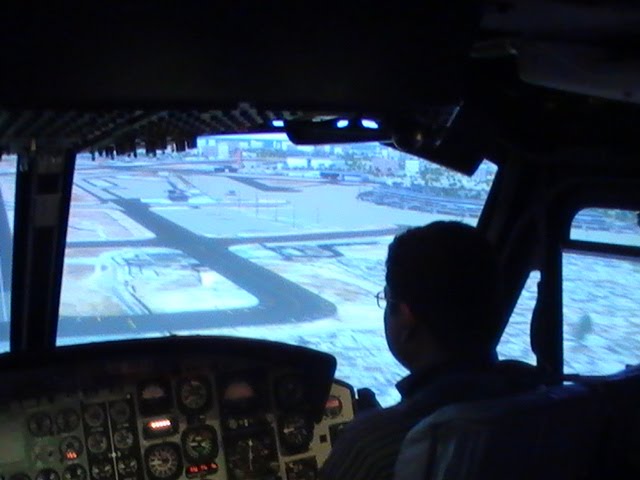
The Bell simulator (above) and (below) Capt Krishna, Chief of Training, during a sortie above Mumbai airport, sitting in Bangalore!
The flying fraternity in India will hopefully give a standing ovation to the man above -- Wg Cdr (Retd.) C.D. Upadhyay, CEO, HATSOFF -- for running from pillar to post to gift India, probably one of the most-sophisticated helicopter simulation facilities. Photos: t-arch-2010
By Anantha Krishnan M. | Aviation Week
Bangalore, India | June 18, 2010
The Helicopter Academy to Train by Simulation of Flying (HATSOFF) – a 50/50 joint venture between Hindustan Aeronautics Ltd (HAL) and simulation technology company CAE, Canada, is finally ready to go live. Though the facility’s official inauguration may not be until September, the Rs 300 crore ($65.2 million) high-tech facility is set to informally go live next week. The first Bell 412EP cockpit is ready for training, and the European Aviation Safety Agency (EASA) has already granted its certification, with approval by another agency pending. AVIATION WEEK spoke to Wing Cmdr. (ret.) C.D. Upadhyay, the CEO of HATSOFF, as part of its India Thought Leaders (ITL) interview series.
AW: How significant will the contribution of HATSOFF be to the Indian helicopter industry?
C.D.U.: It has been recognized all over the world and at the highest levels in Indian aviation, including the Civil Aviation Ministry, that there is an urgent requirement for simulator(s) for helicopters flying in India due to a significantly higher rate of human error contributing to helicopter fatal accidents. Human error in helicopter accidents is higher by an order of magnitude when compared to fixed wing aircraft. We at HATSOFF are confident that the simulator training which we will be imparting to the helicopter pilots will soon reduce this factor in helicopter accidents. Besides the flight safety aspect, we are also very sure that the recurrent training and other forms of training which will be given at HATSOFF will maintain and improve the professional efficiency of helicopter pilots to meet the challenging tasks of the 21st century.
For the full interview, please visit:

Mobile Contamination Analysis Station to check NBC agencts handed over to Army

Mobile Contamination Analysis Station (Mobile Lab) developed by DRDO for rapid detection of contamination caused by NBC agents was handed over to the Indian Army in a ceremony held at DRDE Gwalior on June 18. Installed over 8x8 TATRA vehicle for cross country mobility, the the system armed with state-of-the-art technologies and equipment developed by DRDO labs will be of immense use for armed forces, though it can also be used by civil authorities. Aware of the increasing threat of Nuclear, Biological and Chemical (NBC) weapons, DRDO has successfully developed many technologies for their detection, decontamination as well as for protection against such weapons of mass destruction so that loss of human life can be minimized in the event of such disaster. DRDE Gwalior, a leading DRDO laboratory, in collaboration with other sister labs has developed this Mobile Contamination Analysis Station (Mobile Lab), which is yet another milestone achieved by DRDO in this direction.
The Mobile Lab was flagged off by Dr. V. K. Saraswat, SA to RM, Secretary Defence R&D and DG, DRDO, after the key and the model of this mobile lab were handed over by Dr. W. Selvamurthy, Chief Controller R&D (LS) to Lt. Gen. A M Verma, PVSM, SM, VSM, Director General of Military Operations, in the presence of Dr. K. Sekhar, Chief Controller (MS&LIC), Maj. Gen. Sanjiv Langer, ADGMO, Maj. Gen. Vijai Sharma, ADGES, Brig. Anil Harnal, DDGPP (NBCW), Dr. Sudarshan Kumar, DOM, Dr. R. Vijayaraghavan, Director DRDE Gwalior, Dr. MVS Suryanarayan project leader of the project, Dr. Narendra Kumar, Director, Defence Laboratory, Jodhpur and other officers from DRDO and the Services who were present to grace this occasion.

Friday, June 18, 2010

Slim, sturdy & sexy: BEL tweaks Queen's baton into a smart tech torch; dream project for 12-member young team; R&D head I.V. Sarma terms it as a priceless & emotional mission

The 0.6-m-long Queen's baton for CWG.
By Anantha Krishnan M. | Aviation Week
Bangalore, India | June 17, 2010

Bharat Electronics Limited (BEL) on Thursday (May 17) for the first time demonstrated to the Media, the complete features of the Commonwealth Games (CWG) Queen’s Baton, which is currently on a globe-trotting mission. India’s capital New Delhi will host this edition of CWG from October 3. The baton is set to enter India on June 25.
The sleek and sturdy baton, weighing 1.9 kgs and 0.6 m length, is a unique defense spin-off technology product, which houses a series of cutting-edge features that goes beyond one’s imagination. A technology consortium led by BEL as the final integrator began the work on the baton in April 2009 with Foley Design getting into its mechanical looks and Titan Industries its mechanical fabrication.
BEL hand-picked a 12-member team from its Central Research Laboratory (CRL) and ensured that the first prototype of the baton beeped within 4 months of a challenging deadline. “The Queen’s Baton for the 2010 Commonwealth Games is a combination of elegance, grandeur and precision engineering. It has historical traditions and futuristic technological advancements embedded into it,” I.V. Sarma, BEL Director (R&D) told AVIATION WEEK.

CRL baked the baton with technologies and subsystems like
signal processor, micro controller, LED array with LED driver, GPS receiver, camera sensor, miniature microphone, wireless transceiver module and lithium ion battery for powering the baton.
“The baton is a combination of hand-crafted excellence and precision engineering — it is a true symbol of India: its ancient roots and present vibrant, modern identity. It mirrors India’s diversity — the baton’s color scheme showcases ‘soils’ from every corner of the country, a rich palette ranging from white sands to yellow clay, deep reds to dark browns of loam,” Sarma said.
The stand-out feature of the baton is the design of intelligent programmable multi-color LED array that generates symbolic flag color patterns of all the 71 Commonwealth nations.  “The baton system is remotely configurable using a mobile computing engine called base station.  This mobile base station is used to non-intrusively operate the baton without affecting the baton relay. It is probably a once in a lifetime opportunity for us and we did it with tones of pride,” Dr A.T. Kalghatgi, Chief Scientist, CRL, told AVIATION WEEK.

Four batons were made of which three are currently on world tour, including two stand-bys, and the remaining one is with BEL for demonstration. The glitch-free, rugged baton has even passed the rain-proof test. “During the current relay it was reported that the baton once fell into water, but continued its functions normal. This is a priceless and emotional project for us,” Sarma said, when asked about the project cost.
Even the Queen would have fallen in love with the smart tech stick made by the BEL boys and what stood out as a winning moment at the press meet was when BEL R&D head Sarma presented the entire team that worked behind the baton for the media. 'We are all delighted to be part of this great mission and we are glad that we executed the job within the deadline," Mr L. Ramakrishnan, a senior member of the reserach staff told AVIATION WEEK. (
The Team: Dr A.T. Kalghatgi, L. Ramakrishnan, Rekhas Ashok, V.K. Mittal, P. Satish Kumar, Subha, Thilakavathy, Sudarshan Hegde, Ceon, Shivakamasundari, Vijay B., Rajan Kumar and Jagadeesh P.)
Definitely an inspiring moment for all the devotees of India's tech might.
A quick glance at the baton's tech teeth (Info courtesy, BEL CorpCom)
  • Programmable multi-colour front LED array which can be configured for symbolic flag colour patterns of all the 71 Common Wealth nations where the relay takes place.
  • White LED based lighting for the golden leaf carrying the Queen’s Message; this lighting acts like a “Halo” (glow) lighting for the baton’s top portion.
    In-built digital camera to capture still images. This camera can be used to take pictures from the view point of baton during the journey of baton catching the live moments.
  • In-built microphone. This can be used to record the voice messages of baton bearers when it travels around the common wealth nations.
  • Wireless connectivity to the Base Station using a rugged protocol based Wireless Transceiver so that the baton system is remotely controlled and configured.
  • Global Positioning System (GPS) for locating the baton during the relay. This can be used to locate and track the baton’s journey using the Commonwealth Games 2010 website.
  • Rechargeable Li-Ion Battery with Power Management Circuitry. This in-built battery keeps the baton working for about 4 hours of continuous usage.
    On/Off switch for switching the baton power supply.
  • Charging and Data Interface through the bottom portion of the baton.
  • External charging station for charging the baton.
  • Remote control and configuration of baton using base station. 

For a trimmed version of the same report,  visit:
www.aviationweek.com/india

Thursday, June 17, 2010

A 'cut' above the rest: BRO to begin work on Rohtang Tunnel on June 28; project cost Rs 1,495 crore; deadline 2015

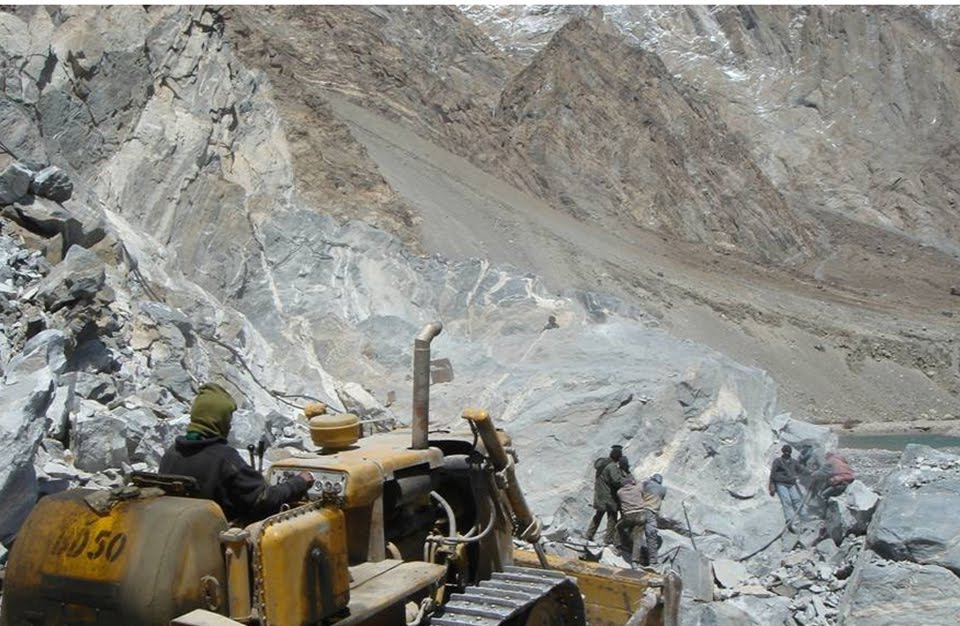
Photos: MoD/ PK
Rohtang, as the word sounds, inspires awe and a sense of invincibility. Perhaps for that reason, the high Himalayan mountain pass gets its name Rohtang, meaning, in Persian, ‘piles of dead bodies’. Located in the Pir Panjal range 51 kms from Manali hill town at an altitude of 3,978 meters (13,044 feet), the Rohtang Pass remains snowbound in winters for over six months, cutting off the tribal Lahaul-Spiti Valley in Himachal Pradesh and also the strategically vital Ladakh region of Jammu and Kashmir.
All that is about to change as the work on the Rohtang Tunnel, a dream project of the Ministry of Defence, begins on the 28th of this month, which would enable an all-weather road link across the snow-capped Rohtang Pass. Digging the Rohtang Tunnel is the most challenging assignment the Border Roads Organisation (BRO), an Inter-Services Organisation (ISO) under the Ministry of Defence, has undertaken in its glorious history of 50 years.
A LANDMARK IN THE MAKING: At 8.8 kms, the Rohtang Tunnel would be dwarfed by the 57 km long Gotthard Base Railway Tunnel nearing completion in the Alps mountains of Switzerland. Rohtang Tunnel, to be built at altitudes ranging between 3,053 mtrs and 3,080 mtrs, will also not be the highest tunnel, when compared to the Fenghuoshan Railway Tunnel, part of Qinghai-Tibet Railway Line in China, completed in 2002, that touches 4,905 m (16,093 ft), at its maximum altitude. So what makes the Rohtang Tunnel unique as an engineering marvel? Answer is, its main characteristic would be a combination of both length and altitude. The Rohtang Tunnel, when completed in 2015, would be the world’s longest tunnel at such altitudes, in fact, much longer than the longest tunnels anywhere around the world at altitudes over 2,500 m. For example, the nearest in comparison to the Rohtang Tunnel (Length 8.802 kms, alt.3,080 m) would be the Anzob Road Tunnel in Tajikistan (L-5 kms, alt.3,372 m), Khojak Rail Tunnel, built by the British way back in 1891, near Quetta in Pakistan (L-3.9 kms, alt.3,912 m) and the Eisenhower Memorial Tunnel in the US (L-2.731 kms, alt.3,401 m) or in terms of altitude the Fenghuoshan Railway Tunnel (L-1.338 kms, alt.4,905 m) and the La Galera Railway Tunnel in Peru (L-1.177 kms, alt.4,781 m).
RAIL/ROAD TUNNELS IN INDIA:
The Rohtang Tunnel will again not have the distinction of being the longest rail/road tunnel in India, - that honour would soon go to the 10.96 km long Pir Panjal Railway Tunnel at Banihal in J&K, part of the Jammu-Srinagar railway line, due to be completed next year. However, the Banihal Tunnel is located at much lower altitudes, - touching 2,200 m at its peak, with an average altitude of 1,750 m. As of now the longest tunnel in the country is the 6.5 km long Karbude Tunnel in Ratnagiri district of Maharashtra, part of the Konkan Railway network, but being located on the Western Ghats, this tunnel is located at almost negligible altitudes of less than 50 feet. The longest road tunnel in India is the 2.8 km long Jawahar Tunnel, again at Banihal, with an altitude of 2,209 m, completed in 1956, and has twin tube tunnels running side by side, also making it unique.
A BRAINCHILD OF RAJIV GANDHI: The Rohtang Tunnel was first conceived in 1983 to develop the Manali-Sarchu-Leh road to an all-weather alternate route for strategic considerations, and a preliminary study was conducted in 1984 in consultation with the Geological Survey of India (GSI) and the Manali-based Snow and Avalanche Studies Establishment (SASE). A brainchild of former Prime Minister Rajiv Gandhi, the detailed feasibility study for the ambitious Rohtang Tunnel was approved at a meeting of the Border Roads Development Board (BRDB) on January 14, 1987, presided over by none other than Rajiv Gandhi himself. It was planned to first construct an Access Road leading to the actual tunnel site. The length of this access road from the tunnel’s South Portal towards Manali is 14.84 kms and 0.94 km at the mouth of tunnel exit, North Portal, joining Manali-Sarchu road at KM 78.7, over Chandra river. The former Prime Minister Shri Atal Behari Vajpayee laid the foundation stone on May 26, 2002 for this approach road, costing Rs.180 crores. The access road to the South Portal tunnel site, on which 18 snow avalanche protection structures are being erected, was completed in the year 2005.
TRANSLATING THE DREAM PROJECT TO REALITY:
The Cabinet Committee on Security cleared the Rohtang Tunnel project in September 2009 at a cost of Rs.1,495 crores. M/s STRABAG-AFCONS, a joint venture between India’s Afcons Infrastructure Ltd and Strabag SE of Austria, world’s fourth largest construction company, was awarded the construction contract through a global tender. Presently the preparatory work and induction of resources is under progress. The actual tunneling work begins this month and it is expected to be completed in 63 months, by the year 2015. Ms/ SMEC International Pvt Ltd, an international firm, has been engaged as the consultants by the BRO for the Rohtang Project till its completion.
KEY FEATURES:
The tunnel’s design would be novel in many ways. Due to its long distance and the rarefied atmosphere at the heights it is located, the tunnel would incorporate Semi-Transverse Ventilation System, where large fans would separately circulate air in and out throughout the tunnel length. The tunnel, with a horseshow shaped cross-section, will be 11.25 m wide at road level, providing ample room for two way traffic and designed to cater to a maximum vehicular speed of 80 km/hr. But the Rohtang Tunnel alone might not be enough to make the Manali-Keylong-Leh highway an all-weather road, as there are another two major snowbound passes along the way, - Baralacha La and Thaglang La. To overcome this the project envisages constructing a 292 kms long all-weather road, Nimu-Padam-Darcha, via Shinkunla Pass, traversing the remote Zanskar region of J&K, estimated to cost an additional Rs 286 crores.
WINDOW OF OPPORTUNITY:
When the foundation stone for the digging work of the Rohtang Tunnel is laid by Smt. Sonia Gandhi, Chairperson of the National Advisory Council, on the 28th of this month, it will mark another step towards fulfilling the aspirations of the people of the remotest regions of Himachal Pradesh and Jammu and Kashmir. The presence of the Minister of Defence Shri AK Antony and Minister of State for Defence Shri MM Pallam Raju, Chief Ministers Shri Prem Kumar Dhumal and Shri Omar Abdullah and Minister for Steel Shri Virbhadra Singh for the ‘Bhoomi Pujan’ ceremony only underlines the significance of the vital strategic and developmental infrastructure project. Once completed the Rohtang Tunnel will provide unhindered road access to the remote regions of
Lahaul-Spiti and Ladakh throughout the year, besides reducing the road distance by approximately 48 km and saving travel time of about four hours.  It will open up new vistas of trade and tourism and generate jobs for the benefit of the local population.
PROJECT ROHTANG:
To undertake the herculean task, the BRO has constituted a separate ‘Project Rohtang’, the 18th such BRO project spread countrywide. The BRO, which celebrated its Golden Jubilee on May 7th this year, is a premier organisation for infrastructure creation and consolidation under the Ministry of Defence. The BRO has constructed more than 48,300 kms of roads, 400 major bridges of 36 kms length and 19 airfields, most of its work spread across difficult terrain and inhospitable climates. At present BRO is working on 699 roads running up to 28,000 kms, which includes new construction, as well as double-laning. Men of the BRO also carry out snow clearance operations on 95 roads, with a road length of 3,000 kms.
BORDER ROADS ORGANISATION - ROAD BUILDERS TO THE NATION:
Guided by their motto ‘Shramena Sarvam Sadhyam’, which means, ‘With hard work everything can be achieved’, the tireless zeal and valour of the General Reserve Engineering force (GREF) personnel, the backbone of the BRO, most often goes unsung. More than 60 percent of its personnel are deployed in high altitude, extremely difficult and insurgency prone areas. The force has lost 1,161 men since the year 2000 to the vagaries of nature and mishap, working in icy weather and precipices several thousand feet high above sharp valleys and gorges, and at times to attacks by militants. During the last decade another 1,850 BRO men have met with a natural death while in service, most of them that can be attributed to diseases arising out of hostile work conditions. A reflection of the glory of the BRO heroes, whose greatest enemy is none other than the hostile Mother Nature, can be found in the 22 Kirti Chakras and 212 Shaurya Chakras including a Bar bestowed upon its gallant men. So the next time you hit a border road in the Himalayas, enjoying the beauty, serenity and splendour of the mountains do take a pause and ponder for a while how Mother Nature here can at times be very grueling and cruel. Etched in the several stone memorials you will come across at the sharp bend every mile or two, are tales of courage, hard work, determination and supreme sacrifice in memory of the men who paved the way for the sake of posterity.

Queen's baton turns sleek 'n' sexy as BEL brains put a tech-heart that beats smart

BEL's hi-tech baton that's going around the world prior to the Commonwealth Games in Delhi in October 2010. The baton will enter India on June 25.
BEL's Central Research Laboratory (CRL) team which gave birth to the baton.
 
BEL's R&D Director I.V. Sarma and tarmak007 blogger with the baton.
Noted-singer-cum-former-journalist-cum-current-BEL CorpCom Deputy Manager Naveen Namboodiri and tarmak007 blogger share a life-time moment by holding a CWG baton.(Below) BEL's CorpCom Queen Shirin Samuel, a former journalist and currently Manager CorpCom, with the baton.
All Photos: BCC-t-arch-2010
(Don't miss the comprehensive story going live on AVIATION WEEK tonite on BEL Boys & the Queen's Baton.)

Tuesday, June 15, 2010

MiG crashes near Raikot, pilot ejects safely


A MIG 21 aircraft of IAF crashed near Raikot about 10 kms South of  Halwara air base on June 15, 2010 at about 11:25 hrs.  The pilot who got airborne for routine flying training sortie ejected safely.  There is no reported damage to civil property or life.  A Court of Inquiry has been ordered to investigate into the cause of the accident. (IAF Release)

AVIATION WEEK: Tejas squadron to be rasied in Bangalore before moving to Sulur; LSP-3 & PV-3 back after successful hot-weather trials

By Anantha Krishnan M. | Aviation Week
Bangalore, India | June 14, 2010
The Indian Air Force (IAF) will form the first squadron of the light combat aircraft (LCA) Tejas in Bangalore next year before it is moved to Sulur, IAF Vice Chief Air Marshal P.K. Barbora tells AVIATION WEEK. (Sulur is located near Coimbatore, Tamil Nadu.) The initial formation of the LCA squadron in Bangalore is primarily due to IAF’s proximity to the aircraft’s designer, the Aeronautical Development Agency; its manufacturer, Hindustan Aeronautics Ltd. (HAL); and IAF’s test pilots’ unit, the Aircraft System Testing Establishment. In addition, the National Flight Test Center (NFTC), which is monitoring all LCA-related flying activities, is also within HAL’s military airport. "Training becomes easier in Bangalore for the IAF pilots on the new platform. In addition, any teething problems that the pilots might face while getting accustomed to Tejas can be sorted out before they move to Sulur,” an NFTC source says.
Phase-II hot-weather trials over: Meanwhile, Tejas crossed a significant hurdle when two LCAs successfully performed in hot-weather trials (HWTs) at Nagpur last week. Sources told AVIATION WEEK that the week-long HWTs were part of Tejas’ phase II schedule. The first phase was completed in 2008. “All new systems onboard and avionics were tested with temperatures varying from 40 to 45 degrees Celsius (104 to 114 deg. F.). We had absolutely no issues with these flights, and both platforms rose to the occasion and performed as expected. We had close to 10 flights as part of the trials,” a source says. Confirming the successful HWTs, P.S. Subramanyam, program director for combat aircraft and director of the Aeronautics Development Agency, says that one limited series production-3 aircraft and another prototype vehicle-3 from the Tejas fleet were part of the HWTs at Nagpur.
For full report, please visit:
For leaving your comment on LCA program, do hit the link below and partake in tarmak007 debate (tD-2). http://tarmak007.blogspot.com/2010/06/tarmka007-debate-td-2-indias-lca.html

For regular updates, visit: https://www.facebook.com/Tarmak007